Lessons learned from a casual retro collector

Collecting retro media sounds incredibly sexy in practice: dusty shelves lined with VHS tapes, long forgotten boxes marked "Nintendos" in the attic of your childhood home, rare cartridges in pristine condition, that awesome feeling when you finally score a copy of Golden Sun still in its original box for a price that doesn’t make you need to take out a second mortgage.
But anyone who’s taken a deep dive into this hobby, like me, knows it’s not all nostalgia and "rare finds" — it’s stress, space issues, rising costs, and a whole lot of compromise. Like, a LOT of compromise.
Supply and Demand Are Brutal
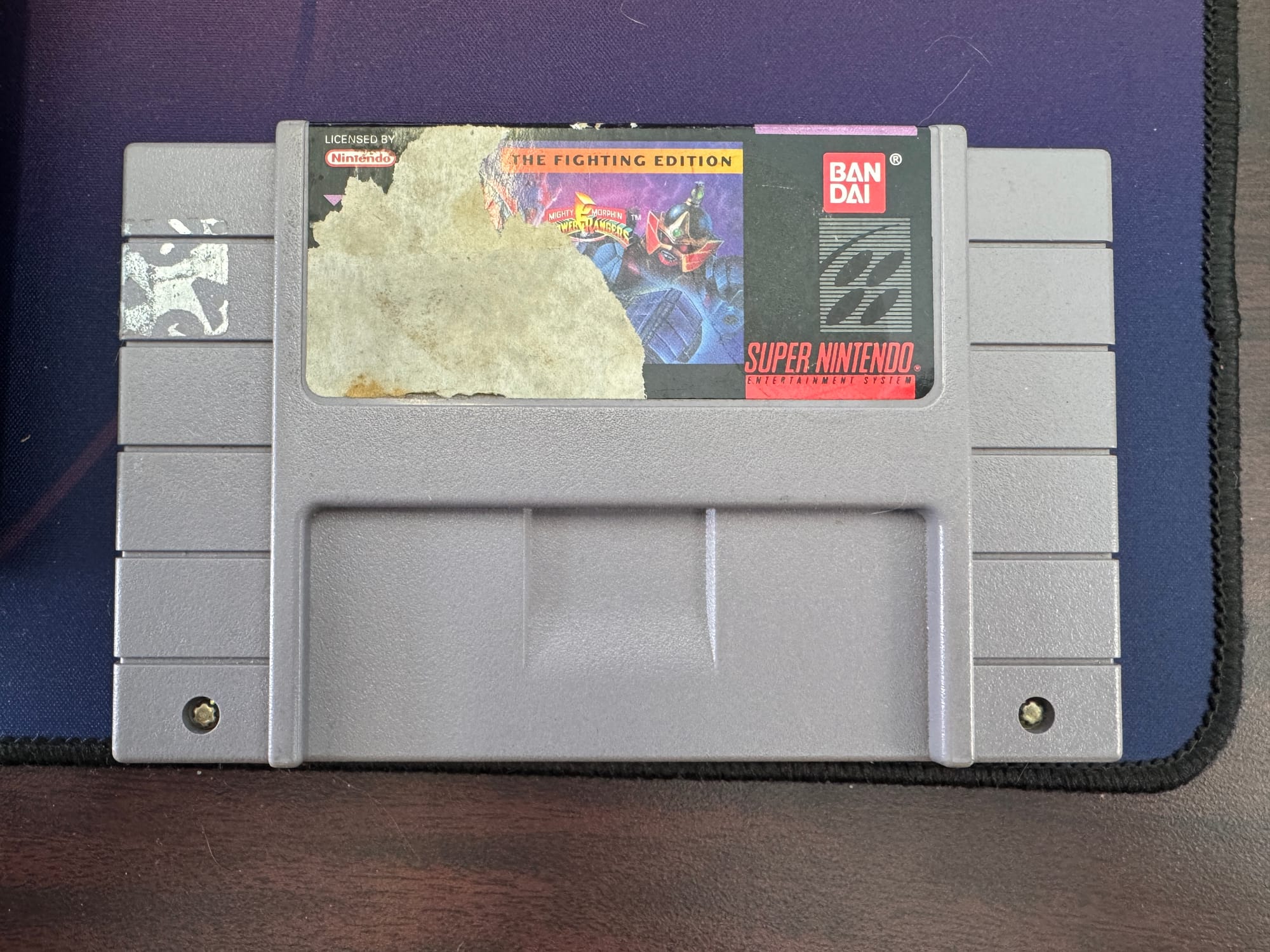
One of the biggest challenges facing game collectors boils down to simple economics: supply is shrinking and demand keeps growing.
They're "retro" games for a reason; they aren’t being manufactured anymore, and the ones that survived the years are either lost, tucked away in boxes, worn out and in disrepair, or owned by someone else who doesn’t want to sell. The result? Prices fluctuate wildly as bidding wars begin. What's worse, it's usually content creators who tend to push these games back into the public view, making demand go up again.
As much as I love channels like My Life in Gaming, who do the work of absolute LEGENDS with their videos, sometimes they hype something up like a CRT or a game and the market just explodes with people suddenly selling off what they kept on a dust-covered garage shelf for hundreds of dollars, saying they "know what they have".
God that's just the single worst sentence you can say when trying to sell something retro. Especially in the CRT market... but we'll get to that.
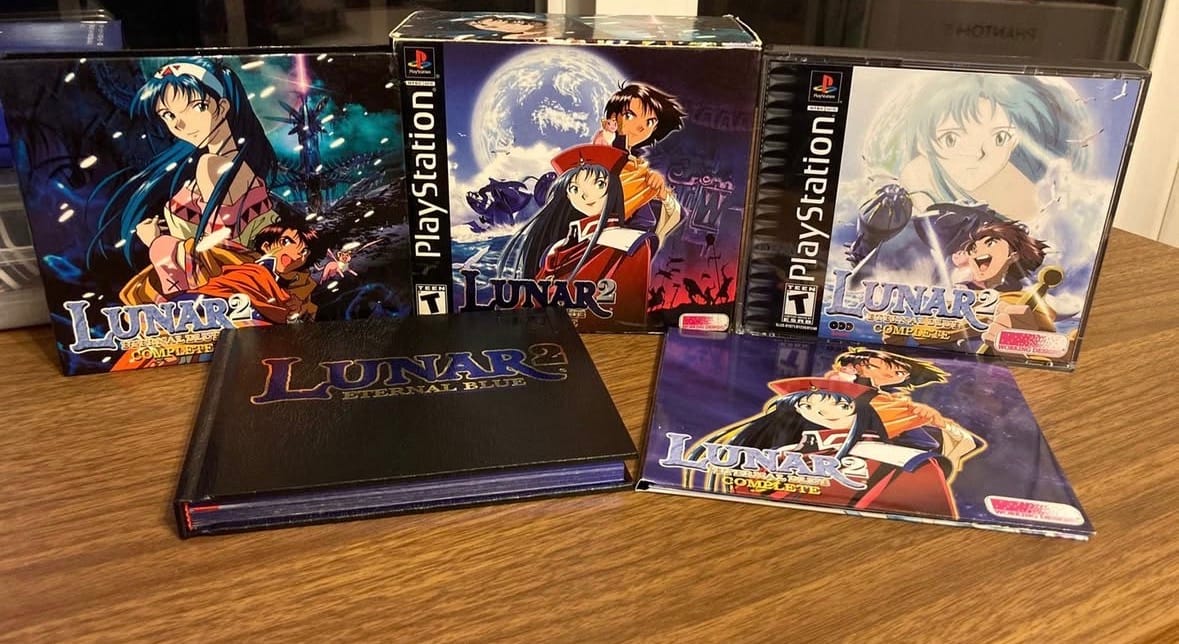
As a JRPG fan, this pain is one I know all too well. Games like Lunar: Silver Star Story Complete in the original NA packaging, Pokemon Crystal, Chrono Trigger, and Shadow Tower go for hundreds of dollars for the lose cartridge or disk only, while others were never printed in mass quantities in North America. That scarcity plus nostalgic demand comes out to steep prices far above original retail.
“Nostalgia tax” is legit. Complete-in-box copies of games, like the Lunar series for Playstation, command serious bucks because people want them, and nobody is making more.
Storage Is a Legit Nightmare
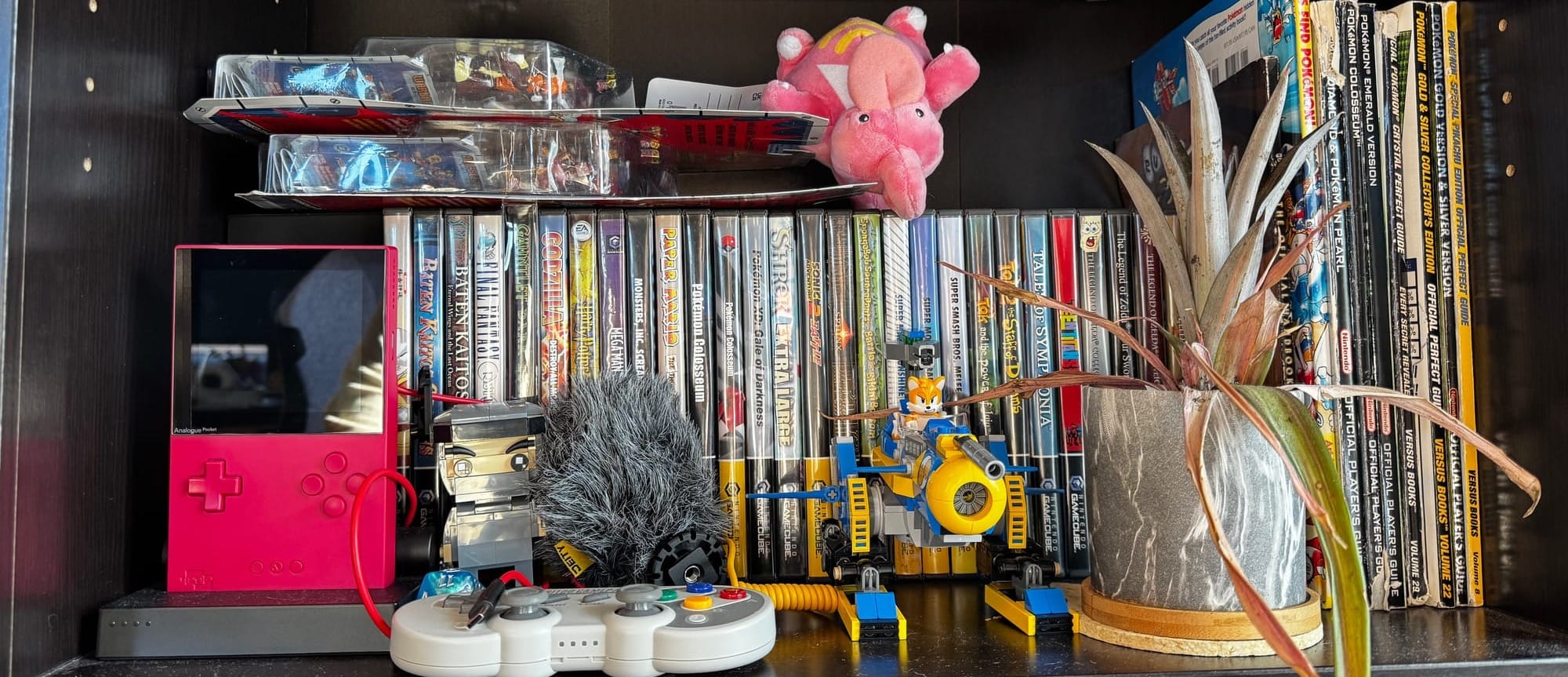
As your collection grows, so does the space it consumes. And if you're like me, you don't have thousands of dollars to dedicate to game-specific shelving, so your shelves in your work-from-home office and gaming space end up piled high with everything imaginable.
And one very unfortunate pineapple plant in Northeast Ohio...
Cartridges, CDs, jewel cases, manuals, strategy guides... this all takes up valuable space. Standard shelves fill up quickly, and without any sort of thoughtful organization, you end up stacking boxes, bins, and loose cartridges wherever they’ll fit.
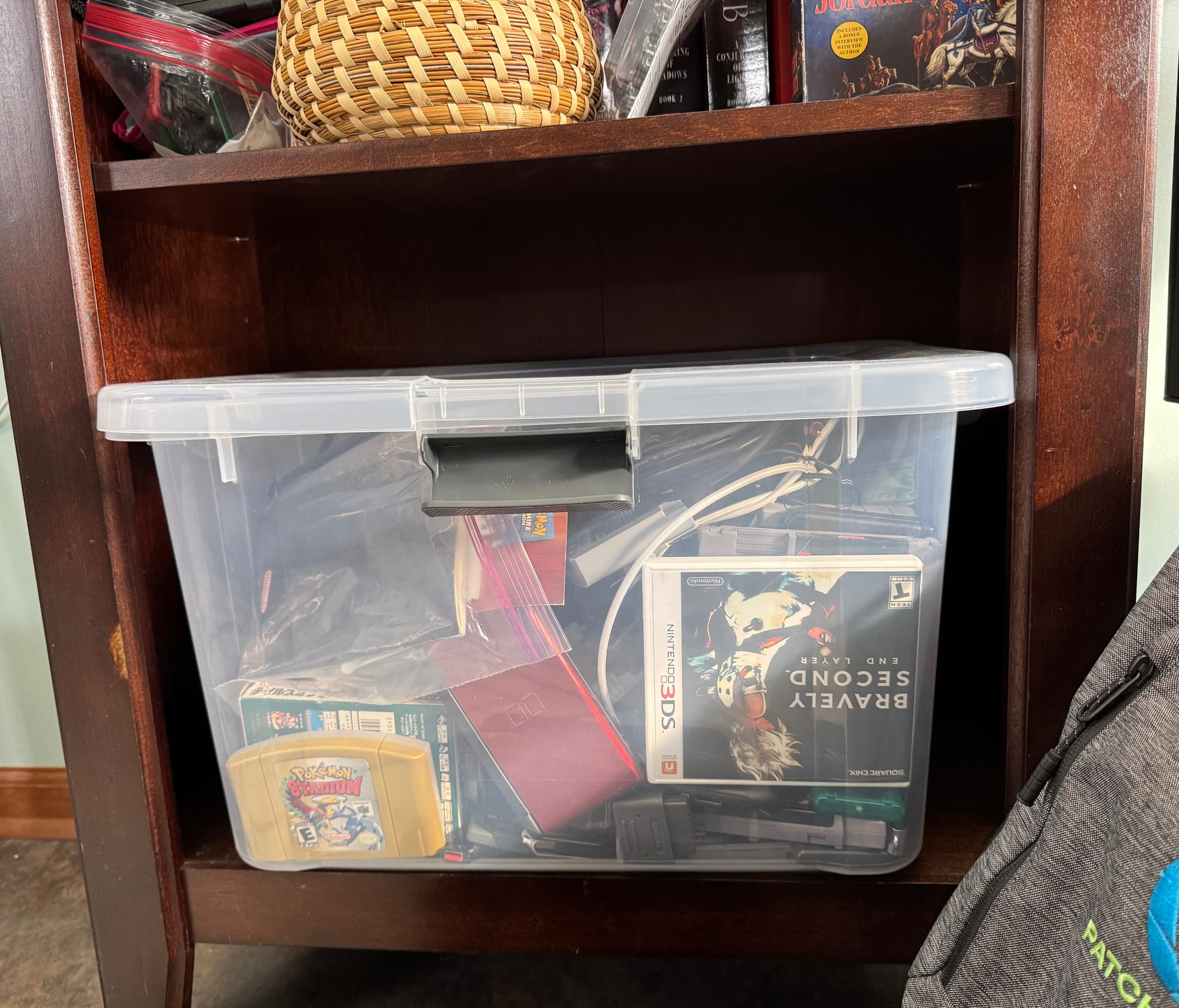
In my years of watching different subreddits, I've seen some collectors get creative with storage solutions; custom built racks, labeled bins, even meticulously catalogued spreadsheets to track what they have and what they're hunting, but that only goes so far. And when you hit that “full house” point, every new acquisition becomes a compromise between your collection ambitions and your living space.
What makes JRPG collectors shake their heads even harder is the sheer depth of libraries for certain systems. A complete set of classic PlayStation JRPGs can fill a single shelf all on its own with room to spare, and some of those games are in that double-wide jewel case. And HALF of those are only one disk, which makes zero sense to me.
But that's just been games. There's another part of retro collecting that hurts the wallet even more...
Physical Hardware Prices are Surprisingly Significant
What, you assumed this was just about collecting games to sit on a shelf forever, or at least until it was time to sell?
HAH!
I have played almost every game in my collection at some point or another, and anything new I add I make a point to try it out. I don't collect for the sake of making a number go up, but for preservation and enjoyment first and foremost!
But in order to actually play these games, you need the hardware they were made for. And that can pose a bit of a problem itself. "But wait, isn't it as simple as buying the console on eBay and playing my games?" So yes, sometimes.
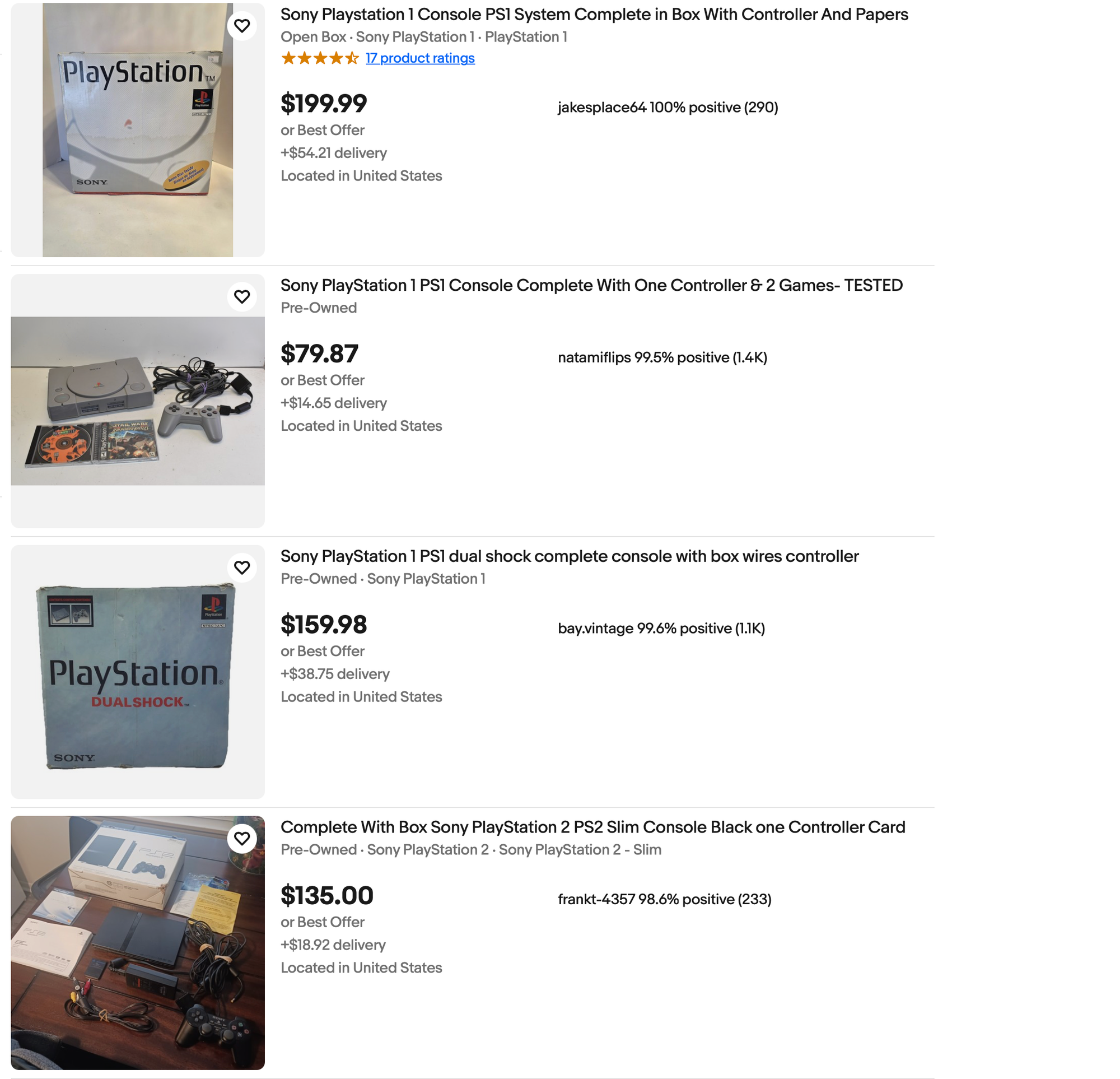
Sure, you could spend $200 USD to get a Playstation complete in box with controller and memory card, but can your tv take the signal and actually process it? Most if not all modern tv's aren't able to display the picture properly if it's in something like 240p, so then you either need to spend more money on a CRT tv, or a converter.
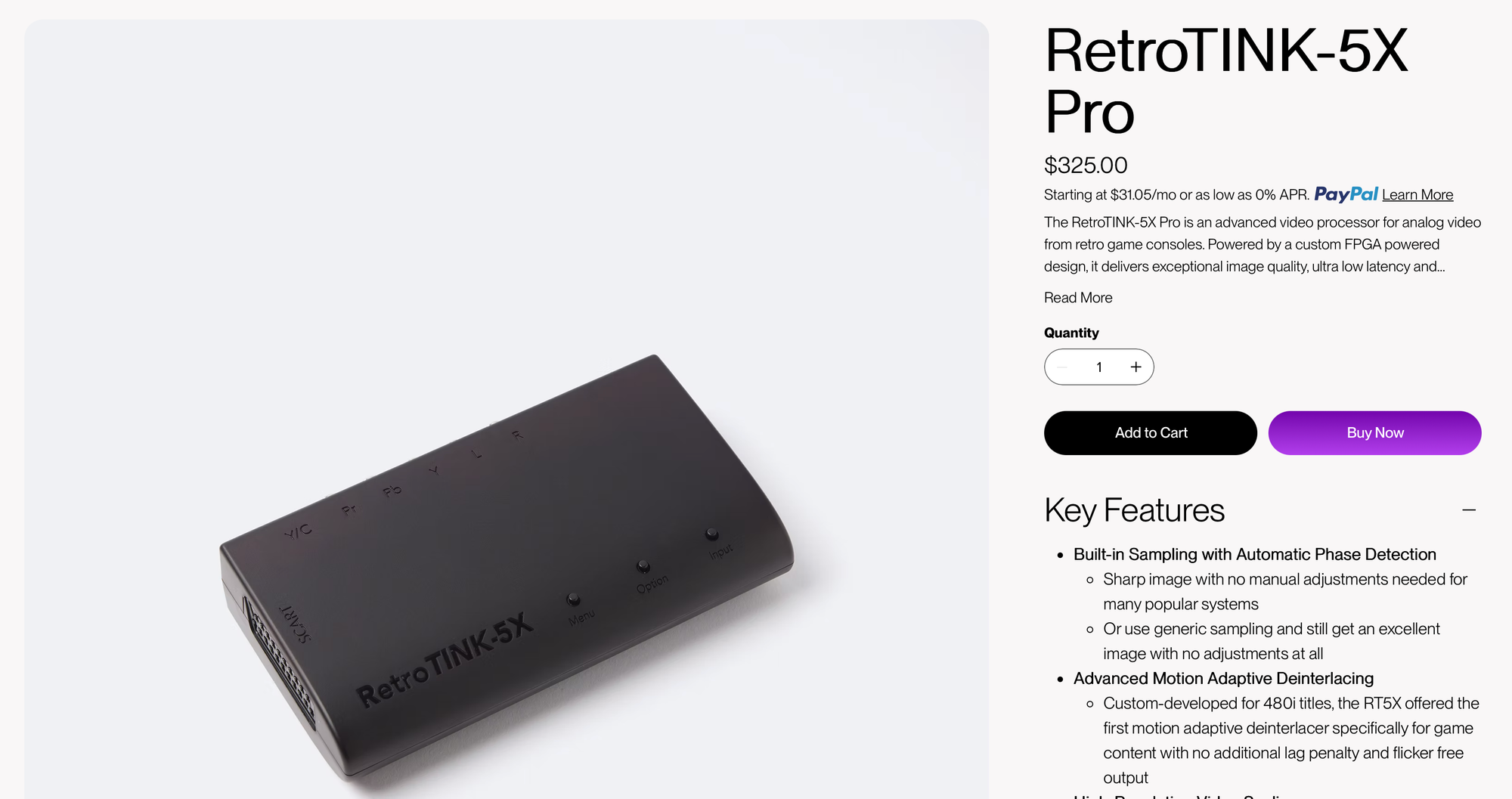
When it comes to converters, there are multiple routes you can take, and multiple price points to boot. Do you buy the cheap no-name Component to HDMI adapter for $5 and deal with the picture quality you pay for? Or do you start a bit better with something like the RetroTINK-2X, which will run you around $140 but provides you with options for Composite, Component, and S-Video and actually upscales the signal? Or do you go for the most bang for your buck options like the RetroTINK-5x Pro and 4k line of products, which will run you $325 and up, but also provide you with the most filters, most settings, and the best quality on the market?
For my money, the RetroTINK-5X Pro has been the single best purchase in my setup. It's almost entirely a plug and play option, where you just tell it what input is being used and the output signal is just... so so good. And with a bit of tweaking, it can be just as glorious as you remember.
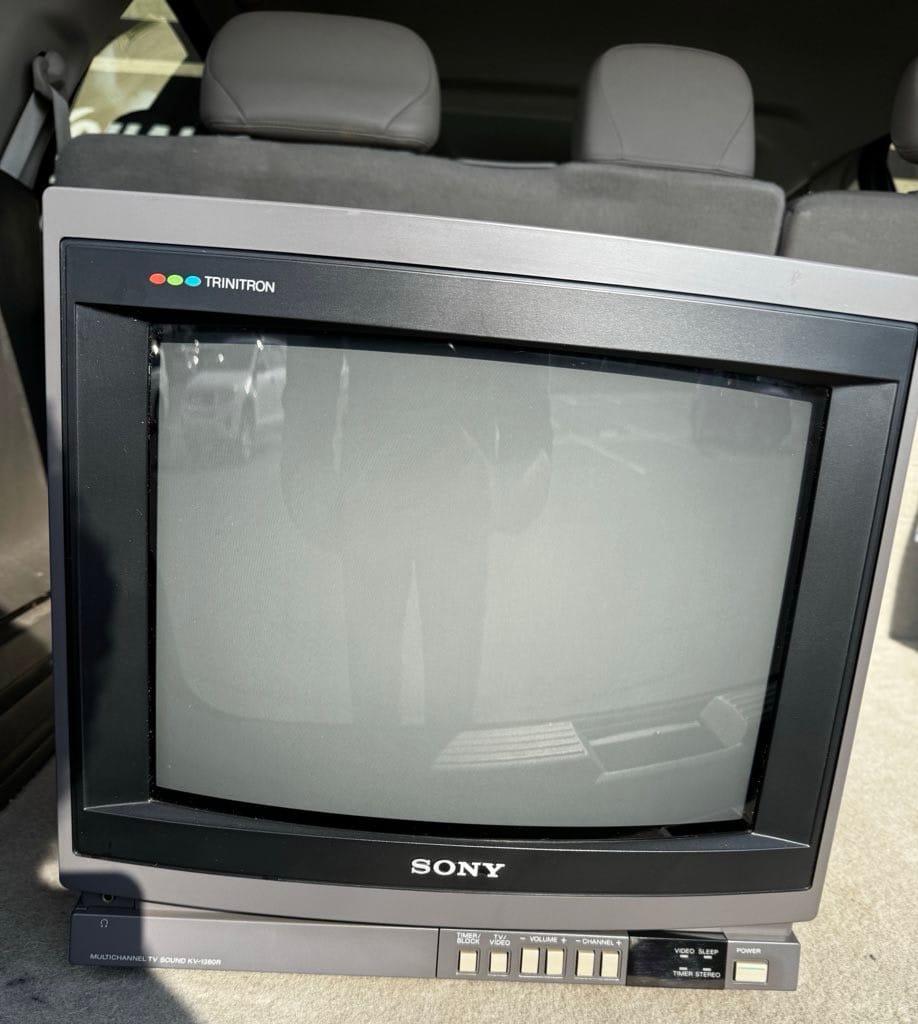
Or you could decide that you want to go the CRT route. For years I was told that old tube televisions were always found "on the curb", free or near-free . Nowadays, folks are bragging about paying $100, $200, or more for a decent CRT because demand has spiked among retro gamers looking for the authentic display experience.
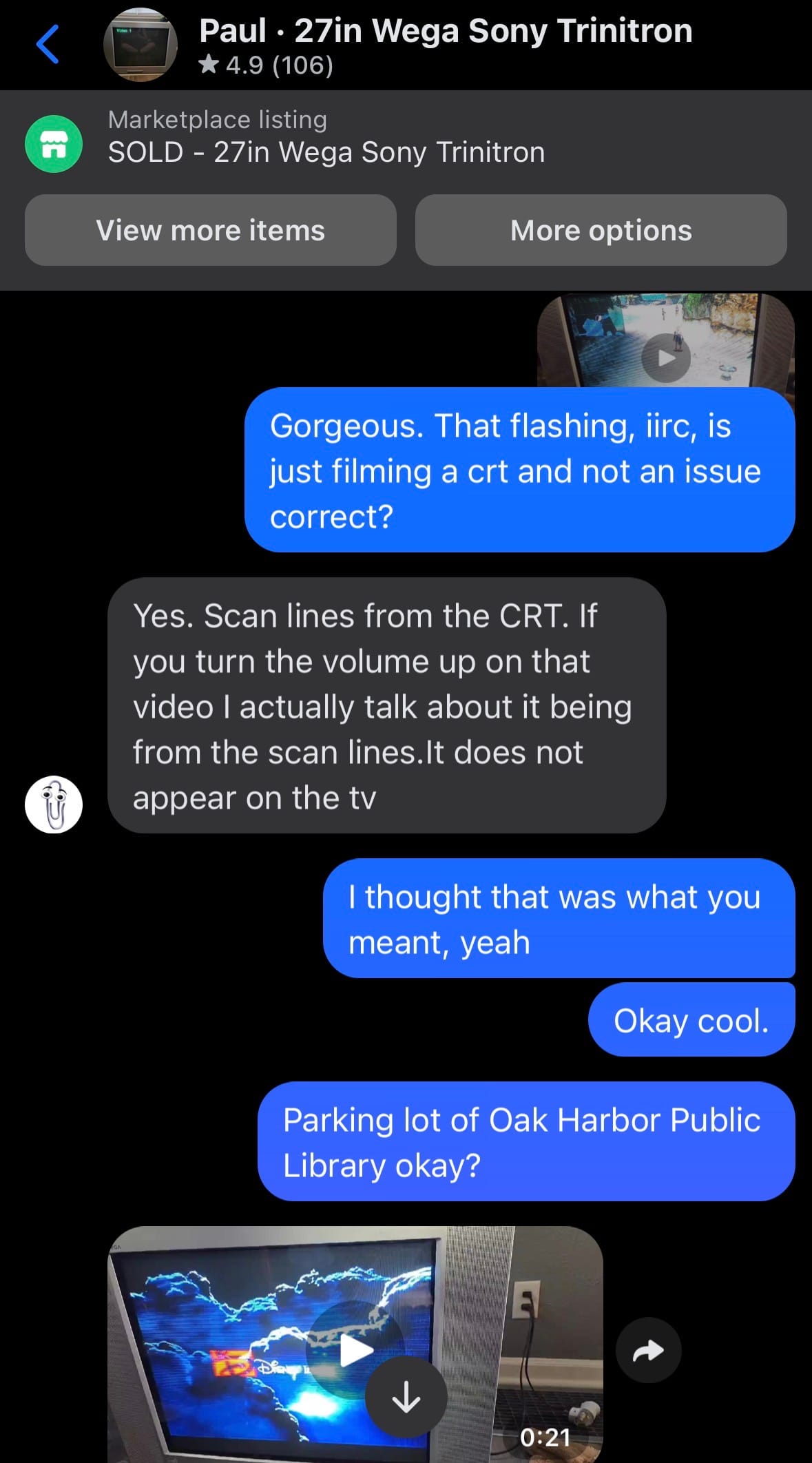
Remember earlier on when I said that the worst thing to see on a post selling anything retro is "I know what I have"? Yeah you tend to see it on almost every CRT post on like, Facebook Marketplace.
And if you’re chasing high-end broadcast-quality monitors (like Sony PVMs or BVMs)? Those can go for high hundreds or even thousands of dollars, driven by enthusiasts and professionals alike.
I somehow have ended up with three CRTs of varying levels due to a miscommunication among friends. One is a simple Prima with a built in dvd player that currently lives in my office for "the memes" as my coworkers have decided.
The second is a Sony Triton KV-1380R that I acquired almost at the same time as the Prima, but this one currently lives in front of our treadmill for use when working out. It's a fun little novelty for sure.
And then there's my crown jewel, a Sony KV-27FS13. As much as I appreciated the smaller CRTs, this one is the centerpiece of my upcoming basement renovation (currently an unfinished basement, turning in to a finished space). I was lucky enough/fast enough to find a listing an hour away from me in Toledo, OH, and the seller was a fellow enthusiast like me, so it didn't cost me an arm and a leg!
For a lot of collectors online, this isn’t just a “want”. Old-school CRTs are part of the culture behind retro gaming. Things like light-gun games and older JRPG visuals were designed with that pixel density in mind, and modern TVs just don’t reproduce that feel without weird scaling or lag.
Preservation Isn’t Just a Buzzword
Ahhh preservation, a word which started out as a bit of a joke to me in my youth but now is the entire reason I am as deep in this hobby as I am...
Collecting retro media isn’t just about playing games or watching your favorite VHS tapes, but about keeping them around for tomorrow. We've lost sooooooo many game disks and tapes to improper storage (like attics or sheds) and rot, which absolutely destroys any chance at playability.
Oh yeah, VHS tapes are a part of this entire thing too. I've just waited until now to talk about them because a) they're a bit of a buzzword around the collector sphere and b) I don't actively hunt down tapes, but check my local thrift stores whenever I'm nearby to see if they have anything weird-looking.
So how do we combat the ever-growing amount of lost media? Preservation. Tools like the RetroTINK-5X Pro can help with the recording of VHS and DVDs to use for something like a Plex or other media server, while other pieces of hardware, like the Epilogue GB Operator and upcoming SN Operator, exist to actually rip the ROM file from the game itself for you to save and play on your emulator of choice.
Also I am sure there are other options out there for other consoles, but for me personally I have started small; just a GB Operator and disk burner for PSX and PS2 games.
I've also started following content from Discount_Orlok (https://www.tiktok.com/@discount_orlok) on TikTok as he covers his journey towards preserving massive amounts of physical media, and honestly it's incredibly impressive!
Collecting, then, becomes a sort of responsibility: you’re not just buying games, you’re doing your part to protect history for future generations. Hell, the VHS backup alone is going to be great to raise my son on!
Overall, if you haven't had the itch to start preserving and collecting retro media or hardware, I can't recommend the hobby. You’re constantly battling rising prices for "rare" titles, trying to shoehorn hundreds of cartridges and discs into limited space, and even navigating the surprisingly steep cost of hardware (not even taking into account the eventual repair work). Add preservation concerns into the mix and what once sounded like a fun hobby can quickly become a full-time commitment of money, space, and effort.
Which is why I have turned to a "only what I actually want" method these days.
But hey, some prices seem to be going down in some cases! A copy of Lunar: Silver Star Story Complete for Playstation, complete in box, was sold for $130 a year ago, and recently sold for $72 in January.
Don't mind me I'm just going to cry into the $250 I spent on the same thing a few years ago.